
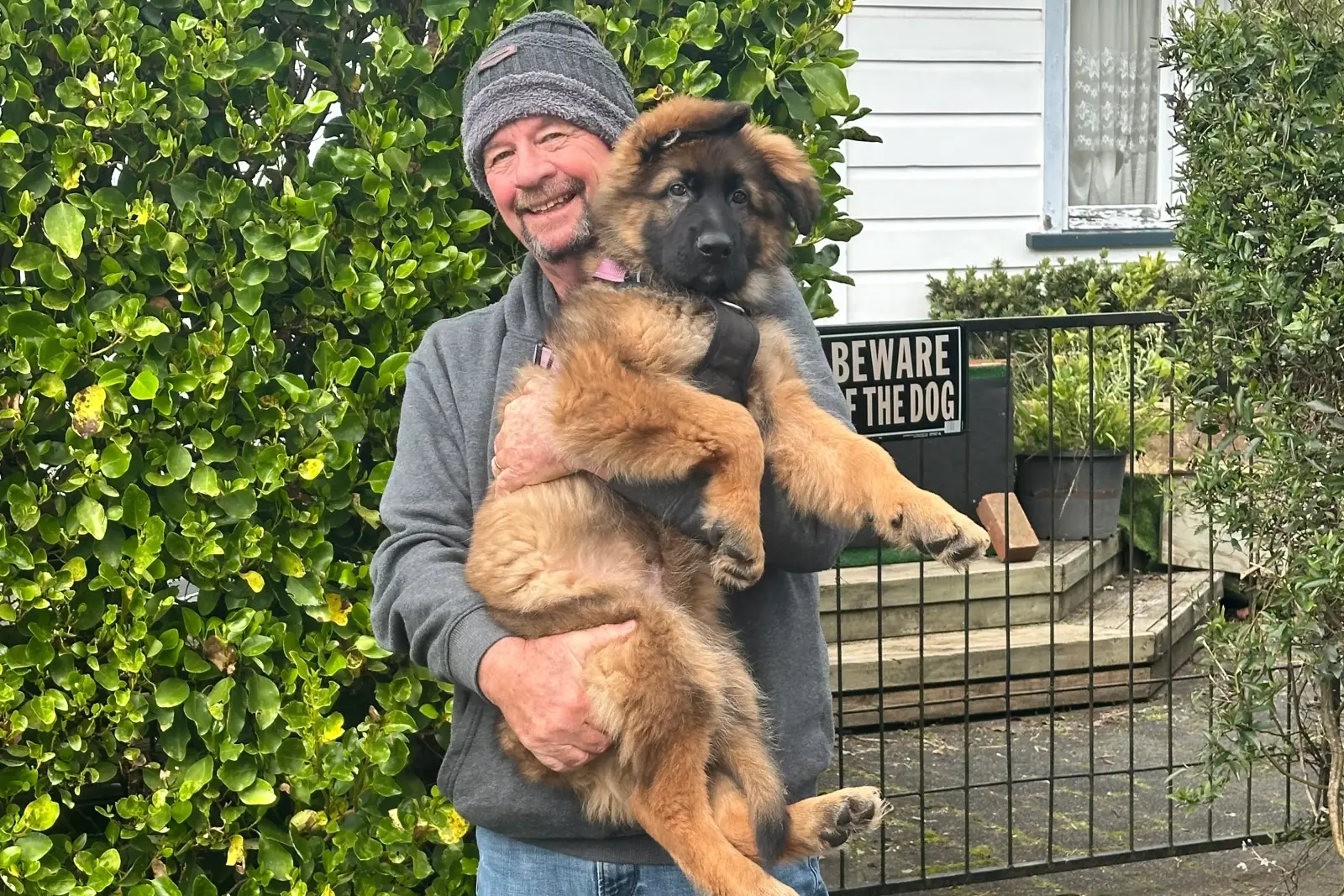
Dog Wee Patches on Your Hamilton Lawn: Why They Happen and How to Fix Them
Published 21 September 2026 · Gecko Lawns, Hamilton
There is a question on our quote form that surprises people: “Do you have a dog?” It is there so we know to shut the gate behind us and say hello before we start the mower. But it also means that after 19 years of mowing Hamilton lawns, we have seen an awful lot of dog wee patches.
You know the ones. A brown circle about the size of a dinner plate, dead in the middle, with a ring of grass around it that is greener than anything else on the lawn. Three or four of them along the back fence, and a big one right outside the ranch slider where the dog goes first thing in the morning.
Here is why it happens, how to tell it from the other things that make brown patches, which of the home remedies actually work (almost none), and how to fix the patches now that the soil is warming up.
Why Dog Wee Burns the Lawn
Dog wee is mostly water, nitrogen and salts. Nitrogen is the main ingredient in lawn fertiliser, and a small amount of it makes grass grow. A whole bladder full, dropped on one spot the size of a saucer, is like tipping a cup of fertiliser straight onto the grass. It burns the roots, the blades go yellow, then brown, then dead.
That is also why you get the green ring. Out at the edge of the puddle the wee is diluted enough to feed the grass instead of burning it, so the ring goes a deep green while the middle dies. If you see a brown circle with a green halo, you can stop wondering. It is the dog.
Wee Patch, Grass Grub, or Just Dry? How To Tell
A Hamilton lawn in summer can go brown for a few reasons, and they need different fixes. The quick way to sort them:
- Round brown patch, dark green ring, grass still rooted. Dog wee. Pull the dead grass and it holds on. The patch is where the dog goes.
- Brown patch that lifts like carpet with no roots underneath. Grass grub. Dig a spade square and you will find fat white grubs. Birds tearing at the lawn is the other giveaway.
- Whole lawn going evenly brown in February, no rings, no circles. Drought. The grass is dormant, not dead, and greens up with rain.
- Brown patches in the shade or the damp corner, no dog, no grubs. Fungus or moss taking over thin grass.
Female dogs and puppies do the classic circles because they squat and empty the whole bladder in one go. Male dogs lift a leg and spread it around, so the damage shows up along the fence line, round the letterbox, and on the edge of the lawn by the path instead of out in the middle.
The Home Remedies That Don’t Work
Every Hamilton dog owner has been told at least one of these. They come up on every Facebook group and most of them are older than we are.
- Tomato sauce or tomato juice in the dog’s food. No. The grass is not being burnt by acid, it is being burnt by nitrogen. Changing the dog’s pH does nothing for the lawn and is not great for the dog.
- Baking soda, vinegar or apple cider vinegar in the water bowl. Same thing. It does not change how much nitrogen is in the wee, and messing with what a dog drinks can put it off drinking, which makes the wee stronger and the patches worse.
- “Lawn saver” tablets and supplements. Some are sold in NZ and some people swear by them. We are not vets and neither is the pet shop. Ask your vet before you put anything in the dog.
- Gypsum, lime or sugar on the patch. None of them undo a nitrogen burn. Water does.
The one thing that genuinely helps from the dog’s side is more water. A dog that drinks plenty produces weaker wee. Wet food, a second water bowl outside, and fresh water every day do more than any tablet.
What Actually Stops the Patches
Nothing here is clever. It is just habits.
- Hose the spot straight away. If you see the dog go, tip a bucket of water on it or hit it with the hose within a few minutes. That dilutes the nitrogen down to fertiliser strength and you get a green patch instead of a brown one. This is the single most effective thing on the list and it costs nothing.
- Give the dog a wee spot. A corner of bark, gravel or pea metal, and take the dog there first thing in the morning for a couple of weeks. Puppies pick it up fast. Older dogs take longer but they get there. Once the dog has a spot, the lawn stops being the toilet.
- First wee of the day is the strongest. The overnight one is the most concentrated. If the dog only goes on the lawn once a day, that is the one to redirect.
- Go easy on the fertiliser. A lawn that has just been fed is already full of nitrogen, so the dog tips it over the edge. Feed lightly and water it in properly, and skip feeding the area the dog uses most.
- Mow a bit higher. Longer grass has deeper roots and shrugs off a light dose. A lawn that has been scalped short burns at the first squat.
- Water deeply, not nightly. A lawn that gets a proper soak once or twice a week has salts flushed through it. Five minutes of sprinkler every evening leaves them sitting in the top few centimetres.
Fixing the Patches: A Good Job for October
Late September through October is a good time to repair dog patches in Hamilton. The soil is warm enough for seed to come up and there is still rain about. The other good month is March, and the Waikato lawn care calendar has the full year. Do not sow in January. It will come up and die in the same week.
- Rake out the dead grass. It is not coming back. Get down to bare soil.
- Flood the patch. Give it a really good soak, more than you think it needs, to flush the salt and nitrogen down and out of the root zone. Do this a day before you sow.
- Scratch the surface. Rough up the top couple of centimetres with a hand fork or rake so the seed has something to grip. If the whole lawn is hard, aerate it first.
- Seed it. A patch mix that has seed, fertiliser and a bit of soil improver in one bag is the easiest way for a handful of dinner-plate patches. For bigger areas, a thin layer of lawn mix and a sprinkle of seed does the same job. Press it in with your foot.
- Keep it damp for three weeks. Seed that dries out once is dead seed. A light water every day in October is usually enough.
- Keep the dog off it. An upturned washing basket, a bit of chicken wire, a couple of stakes and string. It only needs to be three or four weeks, and if the dog wees on the new seed you are back to square one.
If you want to do it yourself, this is the one most Hamilton garden centres and hardware stores carry. Kiwicare’s pet urine page has the how-to.
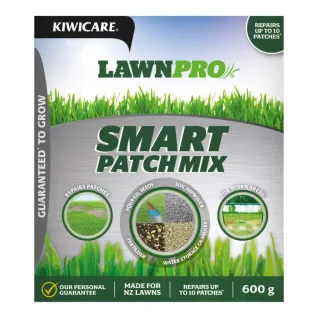 LawnPro Smart Patch Mix
Seed, fertiliser, soil improver and water storage granules in one box, made for exactly this job. Repairs up to ten patches. Kiwicare’s pet urine page explains why the lawn burns and how to put it right.
Read Kiwicare’s pet urine guide →
Not a paid link. We don’t sell or apply it — we just mow the lawn.
LawnPro Smart Patch Mix
Seed, fertiliser, soil improver and water storage granules in one box, made for exactly this job. Repairs up to ten patches. Kiwicare’s pet urine page explains why the lawn burns and how to put it right.
Read Kiwicare’s pet urine guide →
Not a paid link. We don’t sell or apply it — we just mow the lawn.
Kikuyu Forgives, Ryegrass Doesn’t
What grass you have decides how much of this you have to do. Kikuyu spreads by runners, so if the dog stops using a spot the kikuyu will usually run back over it by Christmas without any help. The older lawns in Nawton, Dinsdale and Hamilton East are mostly kikuyu and they hide a lot of dog damage.
Ryegrass and fescue do not spread. A wee patch in a ryegrass lawn stays a bare patch until you put seed in it, and a bare patch in Hamilton fills with prickle weed and dandelions if you leave it. The newer lawns in Rototuna, Flagstaff and Huntington are nearly all ryegrass, so those are the ones that need the patch mix every spring.
Got a dog and a lawn that needs mowing?
We mow around dogs every day. Tick the dog box on the quote form and we’ll shut the gate behind us. Free quote, no obligation — or see what lawn mowing costs in Hamilton first.
Call 0274 871 518Frequently Asked Questions
Why does dog wee leave a green ring around the brown patch?
Dog wee is mostly water and nitrogen. Right where it lands the dose is strong enough to burn the grass. Around the edge it is diluted enough to act as a fertiliser, so the ring goes darker green than the rest of the lawn. A brown circle with a green halo is the giveaway that it is wee, not a bug.
Is it only female dogs that burn the lawn?
No, but they do most of the damage. Female dogs and puppies squat and empty the whole bladder in one spot, so you get a round patch. Male dogs lift a leg and spread smaller amounts on posts, fences and the edge of the lawn, so the damage is along the fence line and round the letterbox instead of out in the middle.
Does tomato sauce or baking soda in the dog’s water stop wee patches?
No. The grass is burnt by nitrogen and salt, not by acid, so changing the dog’s pH does nothing for the lawn and can upset the dog. Do not put anything in the water bowl without asking your vet. Plain water, as much as the dog wants, is the only thing worth adding.
Will the grass grow back on its own?
Sometimes. A kikuyu lawn will usually run back over a wee patch by summer if the dog stops using that spot. Ryegrass and fescue lawns do not spread, so the patch stays bare and fills with weeds unless you put seed in it.
When is the best time to repair dog patches in Hamilton?
Late September through October is a good window. The soil is warm enough for seed to come up and there is still rain around. March is the other good month. Do not bother sowing in January, it will come up and die in the same week.
Do you mow lawns with dogs?
All the time. There is a dog question on our quote form so we know to shut the gate behind us and say hello properly. We have a German Shepherd at home, so a dog in the yard is nothing new.
Happy mowing!