
Grass Grub in Hamilton Lawns: The October Beetles Are Next Autumn’s Brown Patches
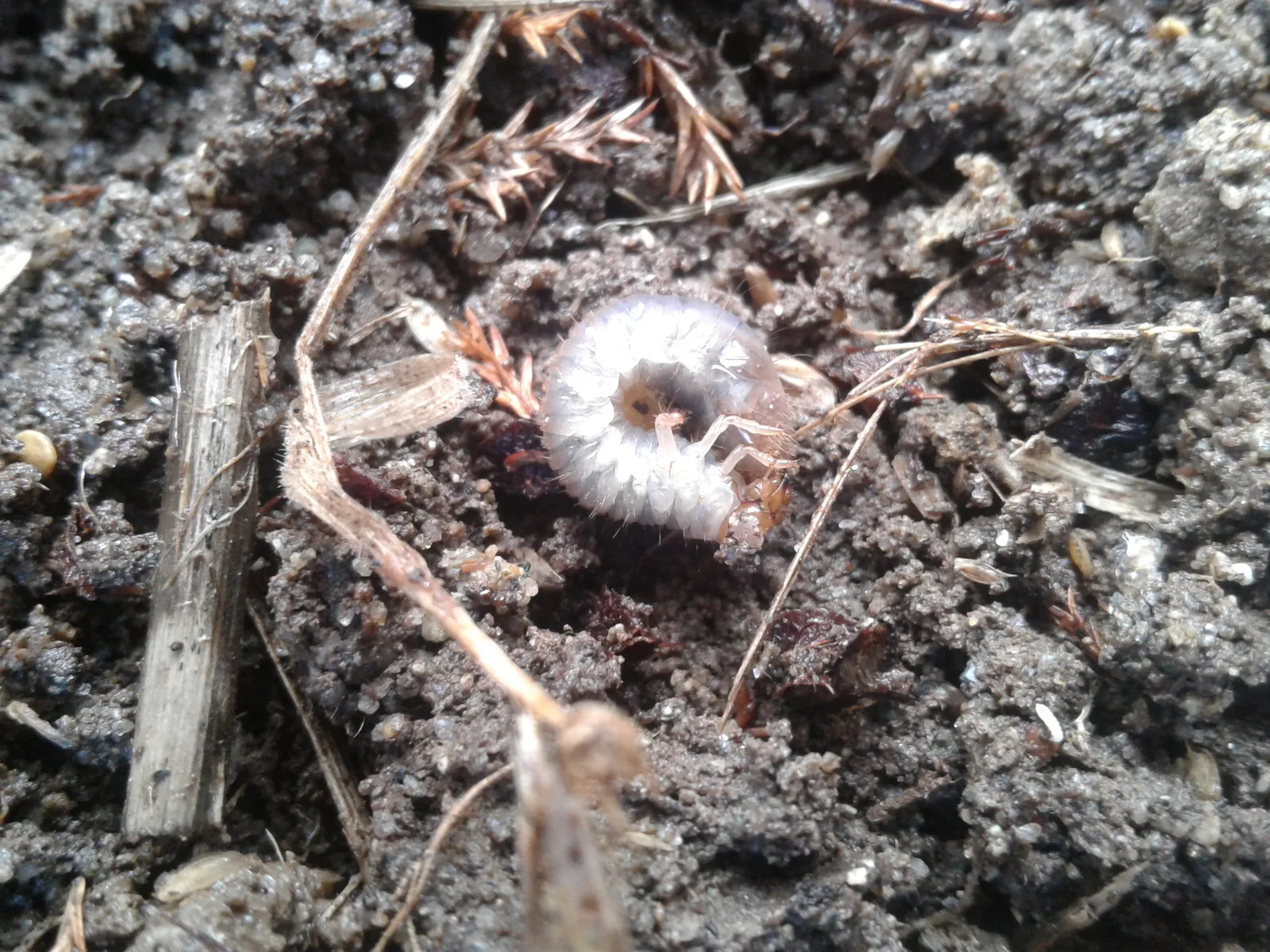
Published 14 September 2026 · Gecko Lawns, Hamilton · Cover photo: grass grub larva by Brett Sandford, CC BY 4.0
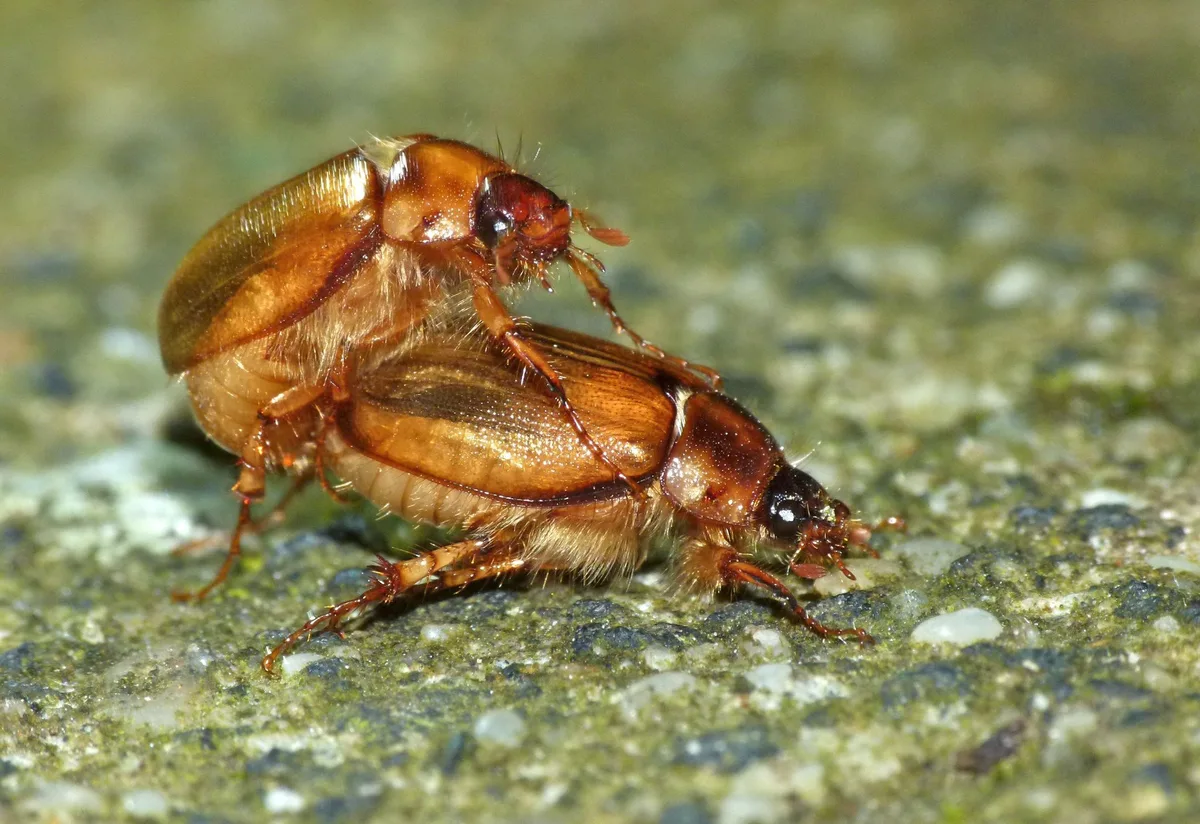
In a few weeks, on the first warm still evening in October, small brown beetles will start bouncing off your windows and crawling round the porch light. Those are grass grub beetles. They came out of your lawn, and they are about to lay their eggs back into it. The grubs that hatch will eat the roots out from under the grass all summer, and in March you will find brown patches that lift off the ground like a piece of carpet.
Grass grub is the most common lawn pest in New Zealand and Hamilton gets its share every year. The frustrating thing is that the damage shows up months after the point where it was easy to stop. By the time the lawn goes brown, the grubs are fat, deep, and nearly impossible to reach.
We have been mowing Hamilton lawns since 2007, and every autumn we get the same question: “Why is my lawn dying in patches when it has been raining?” Nine times out of ten the answer is under the turf. Here is how it works in the Waikato, how to check for it, and the two times of year when you can actually do something about it.
What Grass Grub Actually Is
Grass grub is a native New Zealand beetle. The adult is the brown beetle, about a centimetre long, that flies on warm evenings from October to December. The grub is the larva: a fat, creamy white, C-shaped grub with a brown head, usually curled up in the soil just under the grass roots.
The beetle does not hurt your lawn. It flies, mates, lays eggs, and dies. The grub is the problem. It lives in the soil for the best part of a year and eats grass roots the whole time it is awake. A lawn with no roots cannot take up water, so it browns off and dies, and because there is nothing holding it to the ground, it peels up in a sheet.
The Hamilton Grass Grub Year
The whole cycle runs on the Waikato seasons, which is why timing matters more than what you buy.
- October to December: the beetles fly. Warm, still, humid evenings. You see them at the windows and in the porch light. They lay their eggs in the soil, and the eggs hatch in about two weeks.
- December to February: the grubs eat. They start small and feed on fine roots close to the surface. As the soil warms they move up into the top few centimetres and eat harder. The lawn looks fine, or just a bit thirsty.
- Late February to April: the damage shows. Patches go yellow, then brown, then dead. The turf lifts. Birds start tearing at it. This is when most people ring around asking what to spray, and it is the worst time to be asking.
- May to August: they go deep. The grubs stop feeding, drop down to about fifteen centimetres, and sit out the winter. Nothing you put on the surface reaches them.
- September: they pupate. And in October the new beetles climb out and it starts again.
Grass Grub or Just a Dry Summer? The Carpet Test
A Hamilton lawn in February can go brown for a lot of reasons, and most of them are just January. Drought-stressed grass and grub-eaten grass look the same from the deck. The difference is underneath.
Grab a handful of the brown grass and pull. Dry grass holds. It is still rooted, it is just dormant, and it will green up with rain. Grub-eaten grass comes away in your hand like a piece of carpet, with almost nothing underneath it. If you can roll it back and see bare soil, that is grass grub.
Then dig a spade square. Cut a square about the size of your hand, ten centimetres deep, at the edge of the brown patch where the grass is still half alive. Turn it over and break up the soil. Fat white curled grubs with brown heads are what you are looking for. A couple in a spade square is normal and a healthy lawn shrugs it off. A handful in every square is a problem.
Watch the birds. Starlings, blackbirds, magpies and pukeko can find grass grub better than you can. If the lawn is suddenly full of birds with their beaks in the turf, or you come out in the morning to find little chunks of lawn ripped up and flipped over, they are eating grubs. The birds are not wrecking your lawn. They are telling you what is.
When To Treat Grass Grub in the Waikato
There are two windows that work. Everything outside them is mostly wasted money.
Window one: late September to October, before the eggs hatch. This is a preventer. A lawn insecticide granule labelled for grass grub goes on the lawn now, gets watered in, and sits in the top layer of soil waiting for the eggs to hatch. The grubs die small, before they have eaten anything. If you had grass grub last autumn, this is the one to do, and it is the one nobody does because the lawn looks perfect in October.
Window two: January to early March, while the grubs are small and near the surface. This is a curative. The grubs are feeding in the top few centimetres, so a treatment watered in properly can reach them. The earlier in this window the better. A grub in January is a fraction of the size of a grub in March, and a lot easier to kill.
Getting late: April onwards. The grubs are big, they have finished most of their eating, and they are heading down for winter. A granule watered in hard can still reach them in autumn, but every week you wait they are deeper and there are fewer of them near the surface. January is easy. April is a rescue.
Read the label before you buy. Most grass grub products at a Hamilton garden centre are one or the other: a spring preventer or a summer curative. The bottle will tell you which. Buy the one that matches the month you are standing in.
If you want to do it yourself, this is the one most Hamilton garden centres and hardware stores carry. Kiwicare rates it for February through to late autumn, and it can go on in spring and summer too. It has to be watered in properly to get down to where the grubs are.
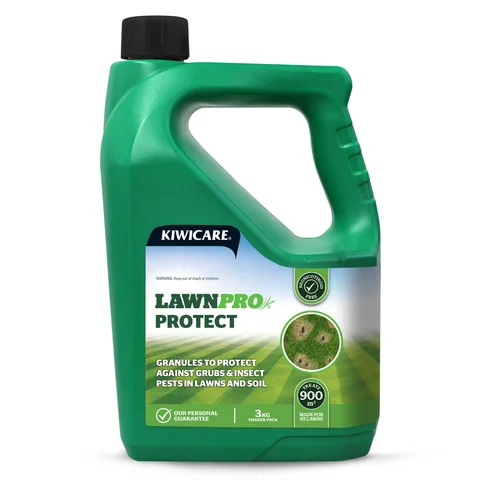 LawnPro Protect
Granules to control and protect against insect pests and grubs in lawns and soils. Kiwicare’s grass grub page has the full how-to: when to put it on, how much, and how to water it in.
Read Kiwicare’s grass grub guide →
Not a paid link. We don’t sell or apply it — we just mow the lawn.
LawnPro Protect
Granules to control and protect against insect pests and grubs in lawns and soils. Kiwicare’s grass grub page has the full how-to: when to put it on, how much, and how to water it in.
Read Kiwicare’s grass grub guide →
Not a paid link. We don’t sell or apply it — we just mow the lawn.
Water it in. Whatever you use has to get off the leaf and down into the soil where the grubs are. Put it on before rain, or give the lawn a decent soak afterwards. Granules sitting dry on top of the grass do nothing. Keep the kids and the dog off for as long as the label says.
If You Have Missed It: Fixing the Patches
If you are reading this in March with a lawn that lifts, the grubs have won this round. Stop chasing them and fix the lawn instead.
- Rake off the dead mat. It is not coming back. Pull it up, rake it off, and get down to soil.
- Loosen the ground. Grub-damaged soil is often dry and crusted. Scratch it up with a rake, or if the whole lawn is hard, aerate it first.
- Sow seed in March. March is the best sowing month of the year in Hamilton. The soil is still warm, the rain has come back, and the grass has all of autumn to get its roots down before winter. The Waikato lawn care calendar has the month by month version.
- Keep it damp for three weeks. New seed that dries out once is dead seed.
- Put next spring in the diary. Grass grub comes back to the same lawns. A preventer in October is a lot cheaper than a bag of seed and a bare lawn in March.
Why Some Lawns Get Hammered and the One Next Door Doesn’t
Every lawn in Hamilton has some grass grub in it. Not every lawn shows it. The difference is roots.
A lawn that gets mown at a sensible height, fed once or twice a year and watered deeply rather than every night grows a deep, dense root mat. A few grubs chew on it and the lawn barely notices. A lawn that has been scalped every fortnight through summer, never fed, and sprinkled for five minutes each evening has shallow roots sitting in the exact layer the grubs live in. Same number of grubs, completely different result.
Grass type matters too. Kikuyu is deep rooted and spreads by runners, so it usually grows back over a grub patch by late spring on its own. Ryegrass does not. A ryegrass patch that has been eaten out stays bare, fills with weeds, and needs seed.
Want a lawn tough enough to shrug it off?
Regular mowing at the right height is most of it. Free quote, no obligation — or see what lawn mowing costs in Hamilton first.
Call 0274 871 518Where We See It Most Around Hamilton
The worst grass grub damage we see is on the newer ryegrass lawns in Rototuna, Flagstaff and Huntington. Those sections were cut and filled, the topsoil is thin, and the lawn went down as ryegrass from seed or roll-out turf. The roots never get deep, so when the grubs move in there is nothing spare. A whole front lawn can go in a month.
The older streets in Nawton, Dinsdale, Hillcrest and Hamilton East have deeper soil and a lot more kikuyu. The grubs are there too. You just see a patch by the driveway rather than a dead lawn, and the kikuyu has usually covered it again by Christmas.
Frequently Asked Questions
What are the brown beetles flying around Hamilton in October?
Grass grub beetles. The adult is a small brown beetle about a centimetre long that comes out of the lawn on warm, still evenings from October to December, flies to the lights, and lays its eggs back in the soil. The grubs that hatch eat grass roots through summer.
How do I know if my lawn has grass grub?
Grab a handful of the brown grass and pull. If it lifts like a piece of carpet with almost no roots underneath, that is grass grub. Then dig a spade square about ten centimetres deep and look for fat white C-shaped grubs with brown heads. Birds tearing at the lawn is the other giveaway.
When is the best time to treat grass grub in the Waikato?
There are two windows. A preventer goes on in late September or October, before the eggs hatch. A curative treatment goes on from January to early March, while the grubs are small and feeding in the top few centimetres of soil. By April they are big and deep and very hard to reach. Check the label, because most products are one or the other.
Is it too late to treat grass grub once the lawn has gone brown?
Late, but not hopeless. By the time the patches show in autumn the grubs have done the eating and are heading deeper for winter, so a granule has to be watered in hard to reach them. Do that, then rake off the dead mat, sow seed into the patches in March, keep them damp, and put a treatment in the diary for next spring or summer so it does not happen again.
Why do the birds keep digging up my lawn?
They are eating grubs. Starlings, magpies, blackbirds and pukeko can hear and smell grass grub under the turf and tear it up to get at them. The birds are not the problem. They are telling you what the problem is.
Can a lawn recover from grass grub on its own?
A thick, deep-rooted lawn often carries a few grubs without showing it, and a kikuyu lawn will usually run back over a small patch by late spring. A thin ryegrass lawn on shallow topsoil will not. Those patches stay bare, fill with weeds, and need seed.
Happy mowing!