
Kikuyu or Ryegrass? What’s Actually Growing in Your Hamilton Lawn
Published 19 August 2026 · Gecko Lawns, Hamilton
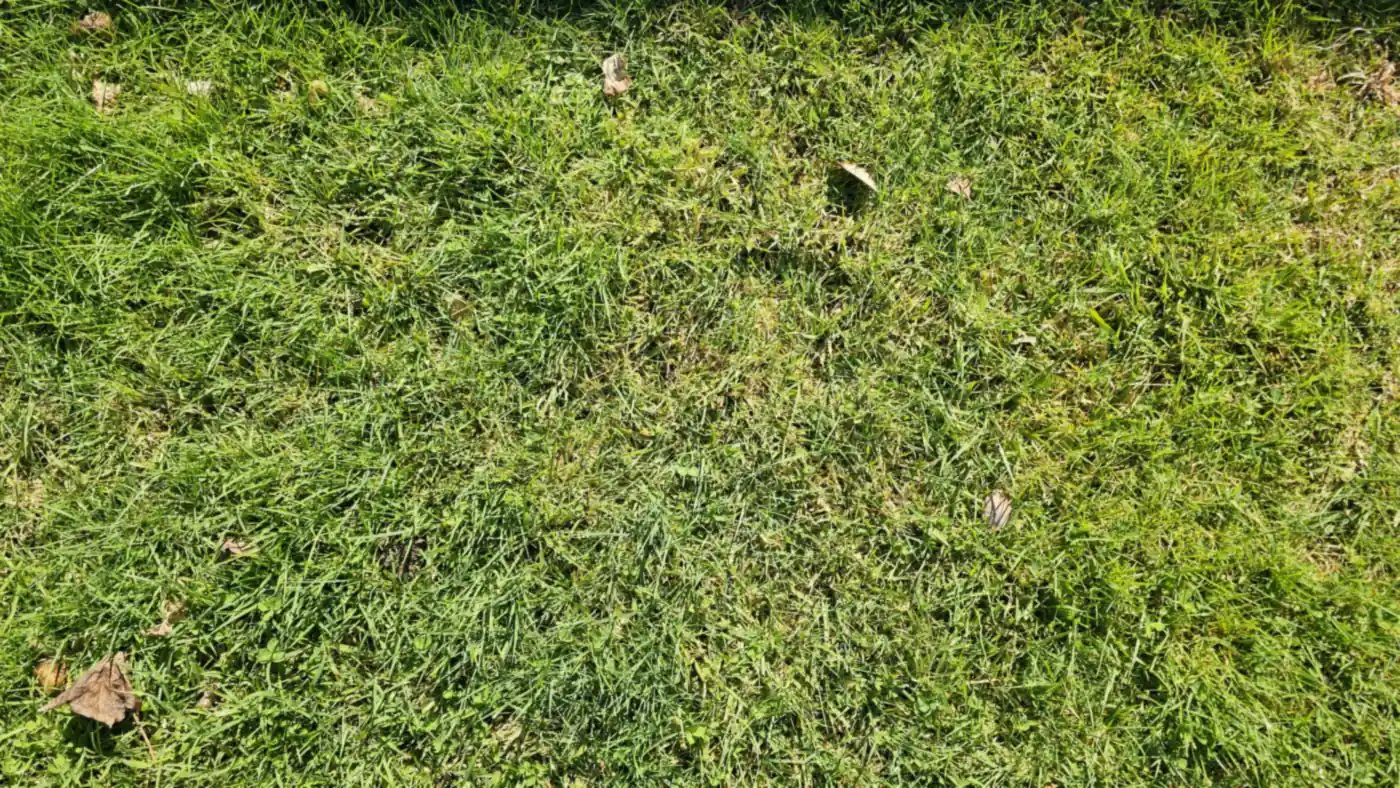
Most Hamilton lawns are a mix: a ryegrass and fescue base with kikuyu creeping through it. The quickest way to tell is to grab a handful and pull sideways. If a thick runner lifts off the ground like a piece of string, you have kikuyu.
It matters more than people think. The two grasses want different mowing heights, different mowing frequencies, and they look completely different in July. Half the lawns we get called out to look at aren’t sick at all. They’re just kikuyu doing what kikuyu does in winter, and nobody has told the owner that.
We’ve been mowing lawns in this city since 2007. Here’s how to work out what you’ve got, in about thirty seconds, standing on it.
The 30 Second Test
Get down on the lawn and do these three things.
- Pull sideways on a handful of grass. Kikuyu comes up as a long runner lying along the surface, with leaves shooting off it. Ryegrass and fescue come up as separate plants with roots on the bottom, no runner.
- Look at a single blade. Kikuyu blades are broad, flat and a bit coarse. Ryegrass blades are narrow, and the underside is shiny enough to catch the light.
- Look at the edges of the lawn. Kikuyu climbs. If grass is running over the concrete edge, up into the garden bed and through the base of the hedge, that’s kikuyu. Ryegrass stays where it was sown.
Nine times out of ten in Hamilton the answer is “a bit of both”. That’s normal. What you’re really working out is which one is winning.
Kikuyu: The One That Spreads
Kikuyu is a warm season grass. It came into New Zealand from the north and it has been working its way down the country ever since. Waikato summers suit it, so it’s in a lot more Hamilton lawns now than it was twenty years ago, whether anyone planted it or not.
What it does well: it takes heat, it takes a dry January, it takes dogs and trampolines and a wheelbarrow parked on it for a week. Bare patches fill themselves in, because the runners just grow across and cover the gap. You don’t reseed a kikuyu lawn. You wait.
What it does badly: it goes dormant in the cold. From about June the growth stops and the lawn goes a straw brown, especially anywhere that catches frost. It comes back green on its own once the soil warms up. Nothing is wrong, nothing needs replacing, and no amount of fertiliser in July will change it.
Ryegrass and Fescue: The One That Stays Green
Whatever seed or turf originally went down on a Hamilton section was almost certainly a cool season blend, mostly ryegrass with some fescue in it. It’s the standard New Zealand lawn mix and it’s what most people picture when they picture a lawn.
It grows hardest in spring and again in autumn, slows down over a hot dry summer, and stays green through a Waikato winter. That winter colour is the main reason people like it.
The catch is that it doesn’t repair itself. It grows in clumps rather than runners, so a bare patch under the trampoline stays a bare patch until somebody puts seed on it. It also gets bullied. If kikuyu turns up in a ryegrass lawn, the kikuyu usually wins over a few summers.
Why It Changes How Your Lawn Should Be Mown
This is the part that actually affects what your lawn looks like from the street.
Height. Kikuyu is happiest kept fairly short, somewhere around 25mm to 40mm. A cool season lawn prefers to sit a bit higher, more like 30mm to 50mm, because the longer leaf shades its own roots through summer. Set the mower for the wrong one and you either scalp it or you let it get thatchy.
Frequency. Kikuyu in a Hamilton January will out-grow a fortnightly mow. If it gets away on you, cutting it back in one hit takes the leaf off and leaves the bare runners showing, and the lawn looks brown for a couple of weeks. Little and often is the only way to mow kikuyu well. That’s the whole reason we talk to clients about how often the lawn actually needs doing instead of putting everyone on the same cycle.
Edges. A kikuyu lawn needs its edges done properly every time, or it will be in the garden bed by March. On a ryegrass lawn edging is cosmetic. On kikuyu it’s maintenance. Edges and trimming are part of the mow for us, not a separate line on the invoice.
What This Looks Like Around Hamilton
It varies by suburb, and mostly by how old the section is.
Newer subdivisions like Rototuna, Flagstaff and Huntington tend to be closer to what was laid: cool season turf on cut and fill ground, still mostly ryegrass and fescue, often thin in the spots where the topsoil is shallow.
Older west side streets around Nawton, Dinsdale and Frankton have had thirty or forty years for kikuyu to move in, and a lot of them are now more kikuyu than anything else. Same city, completely different lawn, and they don’t want the same treatment.
So Which One Should You Want?
Honest answer: the one you already have.
Getting kikuyu out of an established lawn means spraying the whole thing out and starting again from seed or turf, and then it walks back in from next door anyway. It’s a lot of money and a whole season of mud for a result that doesn’t hold.
A kikuyu lawn mown at the right height, often enough, with clean edges, looks better nine months of the year than a struggling ryegrass lawn does. The trick isn’t changing the grass. It’s mowing the grass you’ve got the way that grass wants to be mown.
Coming Into Spring
If your lawn is brown right now and you’re not sure whether it’s dead or dormant, do the pull test. A runner means kikuyu, and it will green up from about October without you doing a thing. If there’s no runner and it’s brown, that’s a different problem, and it’s worth sorting before spring growth kicks in rather than after.
Not sure what you’ve got?
We’ll tell you when we quote. Free, no contract, $10 per 100 square metres with a $35 minimum, GST included.
Call 0274 871 518Frequently Asked Questions
How do I know if my lawn is kikuyu?
Grab a handful of grass and pull sideways. If a thick runner lifts off the surface like a piece of string with leaves coming off it, that’s kikuyu. It also has broad flat blades and a coarse feel, and it creeps into garden beds and over concrete edges.
What grass do most Hamilton lawns have?
Most are a mix. The base is usually a cool season ryegrass and fescue blend from whatever seed or turf went down originally, with kikuyu creeping through it over the years. Very few Hamilton lawns are purely one or the other.
Why does my Hamilton lawn go brown in winter?
If the brown is straw coloured, patchy, and comes back green on its own in spring, that’s usually kikuyu going dormant in the cold. It’s a warm season grass and it stops growing once the soil cools down. It isn’t dead and it doesn’t need replacing.
How short should you mow kikuyu?
Around 25mm to 40mm, and mow it often. Cutting kikuyu hard in one go exposes the bare runners underneath and the lawn goes brown for a fortnight. Little and often beats one big cut every three weeks.
Is kikuyu good or bad for a Hamilton lawn?
Both. Kikuyu handles heat, drought, dogs and kids better than ryegrass, and it repairs its own bare patches. The trade off is that it browns off in winter, needs mowing more often over summer, and it will invade garden beds if nobody edges it.
Can you get rid of kikuyu in a lawn?
Not easily, and usually not worth it. It means spraying the whole area out and starting again from seed or turf, and kikuyu will find its way back in from the neighbours. Managing it is cheaper and gives a better looking lawn.
Happy mowing!