
Paspalum in Your Hamilton Lawn: How to Get Rid of It and Stop It Coming Back
Published 5 October 2026 · Gecko Lawns, Hamilton · Cover photo: paspalum clump by Harry Rose, CC BY 2.0
You mow the lawn on Saturday. By Tuesday it looks shaggy again, but only in patches: a few coarse clumps of wide grass have shot up above everything else, and by summer they have stalks with sticky seed on them that end up all over the dog. That is paspalum, and in a Hamilton lawn it is one of the most common things we mow over.
Right now, in October, is when it starts to wake up. Here is how to spot it, why the usual lawn weed spray does nothing to it, and the three ways to actually get rid of it.
What Paspalum Is
Paspalum (Paspalum dilatatum) is a grass, not a broadleaf weed. It is a summer-growing perennial, which means it comes back every year from the same roots, grows hard from late spring through to autumn, and sits there pale and slow over winter.
It is everywhere in the Waikato. It grows on farm paddocks, roadsides, berms and the edges of reserves, and the seed travels into town lawns on dogs, shoes, mowers and topsoil. A lawn that backs onto a reserve or a paddock, or has a berm full of it out the front, gets a steady supply of seed every summer. In Hamilton that means the lawns along the gullies and reserves in Flagstaff, Huntington and Rototuna, and the sections out towards the Rotokauri farmland in Nawton.
How to pick it in your lawn:
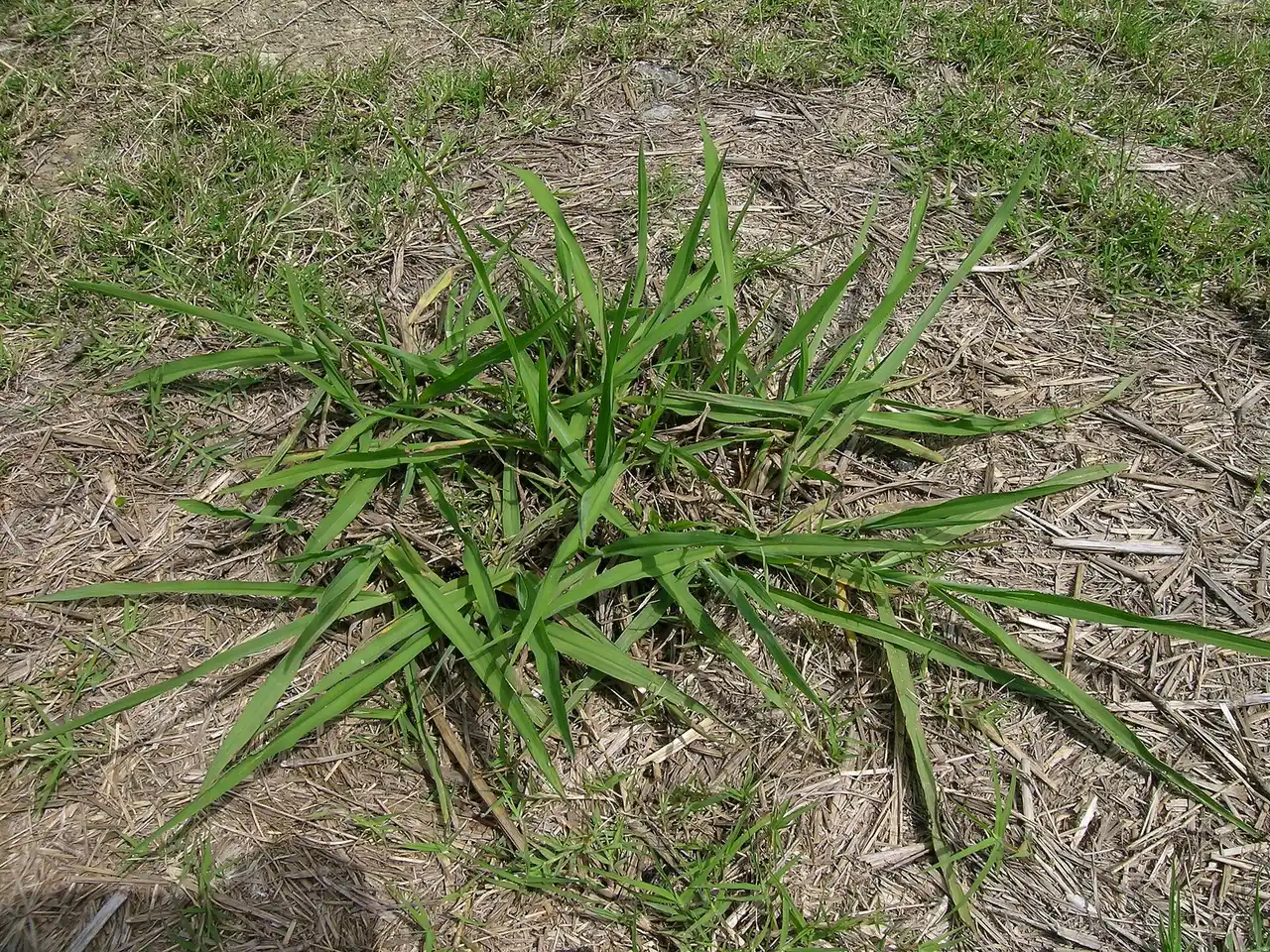
- Clumps, not a carpet. It grows in separate tufts that spread out flat from the middle like a star, with the blades lying close to the ground.
- Wide, coarse blades. Much wider and rougher than the fine ryegrass most Hamilton lawns are sown with. Often a slightly different green to the rest of the lawn.
- It grows faster. Two or three days after a mow in summer, the paspalum clumps are already standing up above the rest.
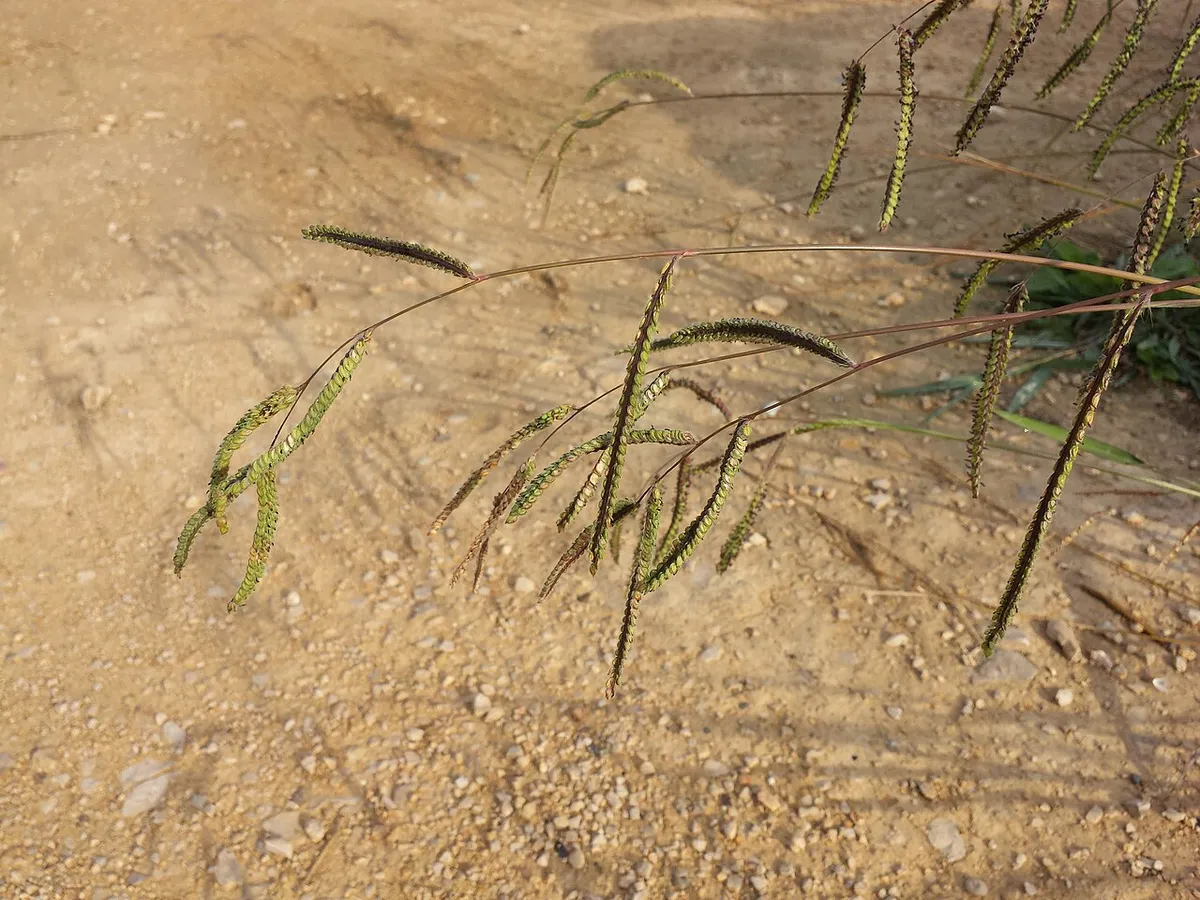
- The seed heads give it away. From about December, it sends up tall, tough stalks with a few spikes of seed down one side. Late in summer those seed heads go sticky and cling to everything.
Paspalum, Kikuyu or Summer Grass?
Three coarse grasses turn up in Hamilton lawns in summer, and they need different answers.
- Paspalum. Separate clumps. Wide flat blades. Tall stalks with a few one-sided seed spikes. Comes back from the same spot every year.
- Kikuyu. Not clumps but a mat. Thick runners creep across the top of the ground and root as they go, and it takes over whole areas instead of sitting in tufts. Plenty of older Hamilton lawns are kikuyu on purpose.
- Summer grass. Pale, soft, spreading, with thin finger-like seed heads. It is an annual, so it dies off in autumn and leaves a bare patch, then comes back from seed next summer.
If it is in clumps and it was there last year in the same place, it is almost always paspalum.
Why Your Lawn Spray Won’t Touch It
This is where most people come unstuck. They buy a lawn weedkiller, spray the whole lawn, the clover and prickle weed die, and the paspalum carries on as if nothing happened.
That is because the selective lawn sprays work by telling the difference between a grass and a broadleaf weed. They kill the broadleaf and leave the grass. Paspalum is a grass, so it gets left alone with the rest of the lawn.
There is no spray on the shelf at Hamilton garden centres that takes out paspalum and leaves your ryegrass standing. Anything strong enough to kill it kills the lawn too. So the answer is to put the killer on the paspalum and on nothing else.
Mowing Won’t Kill It Either
Paspalum grows flat. The mower goes over the top of the clump, takes the tips off, and the plant carries on. Mowing lower does not help. It scalps the good grass around the clump, opens up bare soil, and gives more paspalum seed somewhere to land.
What mowing does do is stop it spreading. Every seed stalk you cut off before it ripens is seed that never makes it into the rest of the lawn. In summer, that means mowing often enough that the stalks never get a chance to finish. On a Hamilton lawn in January, that is every week or every fortnight, not every month. See how often to mow for the full picture.
Three Ways to Get Rid of Paspalum
1. Dig it out (a few small clumps)
If you have three or four clumps, dig them out. It is free and it is done.
- Wait for wet ground. After a decent rain the whole clump lifts out. On dry Hamilton clay in February you will just snap it off at the top.
- Go deep and wide. Use a sharp spade or an old kitchen knife and cut around the clump, then lever the whole crown out with the roots. Any bit of root left behind grows back.
- Fill and seed the hole. Bare dirt is an invitation. Fill with soil, firm it down, and put a pinch of lawn seed in. October and autumn are the best times for the seed to take.
2. Paint it with gel (a scatter of clumps through the lawn)
This is the cleanest way to kill paspalum in the middle of a good lawn. A brush-on glyphosate gel goes onto the paspalum leaves and nowhere else, travels down to the roots, and kills the whole plant.
- Do it while it is growing hard. Paspalum is a summer grass, so from late spring through summer. In winter it is barely growing and the gel does very little.
- Leave the clump unmown for a week or so first so there is plenty of leaf to paint.
- Gloves on, then paint as many leaves as you can. The more leaf you cover, the better the kill.
- Don’t drip it on the good grass. It kills any lawn grass it touches, so a sloppy job leaves a ring of dead lawn around the clump.
- Pick a dry spell. The gel needs to dry on the leaf before any rain.
- Then leave that patch alone until it has gone yellow and died. Mowing straight over it cuts off the leaves before the gel has moved down to the roots.
- Expect a second go on big clumps. Anything that greens up again a few weeks later gets painted again.
If you want to do it yourself, this is the product Kiwicare recommends for paspalum in lawns, and it is on the shelf at most Hamilton garden centres and hardware stores.
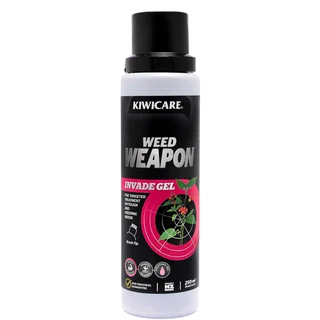 Weed Weapon Invade Gel
A ready-to-use glyphosate gel with a brush tip, coloured red so you can see which leaves you have already done. You paint it straight onto the paspalum and it kills the clump down to the roots. Kiwicare’s paspalum page has the full how-to.
Read Kiwicare’s paspalum guide →
Not a paid link. We don’t sell or apply it — we just mow the lawn.
Weed Weapon Invade Gel
A ready-to-use glyphosate gel with a brush tip, coloured red so you can see which leaves you have already done. You paint it straight onto the paspalum and it kills the clump down to the roots. Kiwicare’s paspalum page has the full how-to.
Read Kiwicare’s paspalum guide →
Not a paid link. We don’t sell or apply it — we just mow the lawn.
3. Kill the patch and resow (when it has taken over an area)
Sometimes the paspalum has won. A whole corner of the lawn, or the strip along the fence, is more paspalum than lawn. Painting a hundred clumps is not realistic.
The honest fix is to spot-spray that area with a glyphosate weedkiller, let it die off completely, rake out the dead thatch and resow it. It means a bare patch for a while, so time it well:
- Spray in late summer, February or early March, while the paspalum is still growing hard.
- Sow in March or April when the autumn rain comes back and the soil is still warm. New grass in Hamilton strikes faster in autumn than at any other time, and it has the whole winter and spring to thicken up before next summer’s paspalum seed lands. The Waikato lawn care calendar has autumn sowing in the right order.
- Use a shield or a still day. Glyphosate drift on the good lawn or the garden kills that too. Gloves, long sleeves, and read the label.
Stopping It Coming Back
Getting rid of paspalum is one job. Keeping it out is a different one, and it comes down to not leaving gaps.
- A thick lawn is the best defence. Paspalum seed needs bare soil and light to get going. Feed the lawn in spring and autumn and the grass closes the gaps first.
- Don’t scalp it. Mowing short opens up the lawn. Keep the mower at the same, sensible height all summer.
- Cut the seed stalks before they ripen. Regular mowing through December to March is what stops one clump becoming twenty.
- Get the clippings off the lawn when it is seeding. Mulching seed heads back into the lawn just plants them. Catch them while the stalks are out.
- Watch the edges. If the berm or the reserve next door is full of paspalum, the clumps will always start along that side first. Deal with them while they are small.
Go out this month while the lawn is still green and even, and find the clumps. In October they are easy to spot and small enough to dig. By February they are the size of a dinner plate and seeding.
Want the seed stalks kept down all summer?
We mow on the same day each round, edges included, and we take the clippings away with us. Free quote, no contract — or see what lawn mowing costs in Hamilton first.
Call 0274 871 518Frequently Asked Questions
What does paspalum look like in a lawn?
Coarse, flat clumps of wide-bladed grass that sit in a rosette and look a different colour and texture to the rest of the lawn. In summer it sends up tall stalks with a few spikes of seed on each, and the seed heads are sticky. If a clump grows back taller than the rest of the lawn two or three days after mowing, it is usually paspalum.
Is there a spray that kills paspalum but not the lawn?
Not one you can buy off the shelf in Hamilton. Paspalum is a grass, and the selective lawn weedkillers only take out broadleaf weeds like clover and prickle weed. Anything that kills paspalum kills the lawn grass it touches too, so the trick is to put it on the paspalum and nothing else, with a brush-on gel or a careful spot spray.
Can I just dig paspalum out?
Yes, for a few small clumps. Dig it out when the ground is soft after rain, take the whole crown and go deep and wide enough to get the roots, because any piece of root left behind grows back. Fill the hole with soil and put some lawn seed in it.
When is the best time to get rid of paspalum in Hamilton?
Paspalum grows in summer, so treat it from late spring through to the end of summer, when it is growing hard and takes the gel or spray down to the roots. In winter it barely grows and treatment does very little. February and March work well, because you can resow the bare patches in autumn when the rain comes back.
Does mowing get rid of paspalum?
No. Paspalum grows low and flat, so the mower goes over the top of the clump and it keeps growing. What regular mowing does do is take the seed stalks off before the seed sets, which stops it spreading through the rest of the lawn.
Why are my dog and my socks covered in sticky seeds?
That is paspalum seed. The seed heads are sticky in late summer and they cling to fur, socks and trouser legs, which is one way paspalum gets carried into new lawns. Keeping the stalks mown before they seed stops it.
Does Gecko Lawns get rid of paspalum?
No. We mow and edge, and we take the clippings away. Mowing on a regular round keeps the seed stalks down and the lawn looking even, and we will point out the clumps if we see them. Digging or painting them is a job for you on a Saturday morning.
Happy mowing!