
Gecko Lawns Papatoetoe blog
Prickles in Your Papatoetoe Lawn? What to Do About Onehunga Weed Now
It’s named after an Auckland suburb for a reason. Here’s what works in November, and what doesn’t.
It’s the first warm weekend of the year. The kids kick their shoes off, run out onto the lawn, and come straight back in hopping. If that’s happening at your place in Papatoetoe right now, you have Onehunga weed. It was named after an Auckland suburb, and South Auckland lawns are still where it does best.
The bad news first: spraying it now won’t get rid of this summer’s prickles. The good news is that there’s still plenty you can do, and one job next winter that stops it for good.
The short answer
- The prickles are seeds. The weed has already flowered and set them. They sit at ground level and harden as the plant dies off.
- Spraying in November doesn’t remove them. It kills a plant that is dying anyway and leaves every prickle where it is.
- This summer: mow with the catcher on and rake the worst patches.
- Next year: spray in winter, June to August, before it flowers.
What Onehunga weed looks like
For most of the year you won’t notice it. Through autumn and winter it’s a small, flat, feathery rosette tucked down in the grass, a bit like a sprig of carrot top or parsley. It’s soft, it doesn’t hurt, and the grass grows over it.
In spring it flowers, tiny and green, right in the centre of the rosette. Then each flower turns into a cluster of seeds with sharp spines. By November in South Auckland most of them have formed and hardened. The plant browns off and shrivels, and the prickles stay behind, sitting at exactly the height of a bare foot.
Why spraying now doesn’t help
A lawn weed spray works by being taken in through the leaves of a living, growing plant. In winter, Onehunga weed is soft and growing hard, and it dies within a couple of weeks.
By now it has done its job. The seeds are set, and the plant is on its way out. Spray it and you have a dead weed with the prickles still attached. That’s why so many people in Auckland spray in December, see the weed go brown, and still get stung all summer.
What actually helps this summer
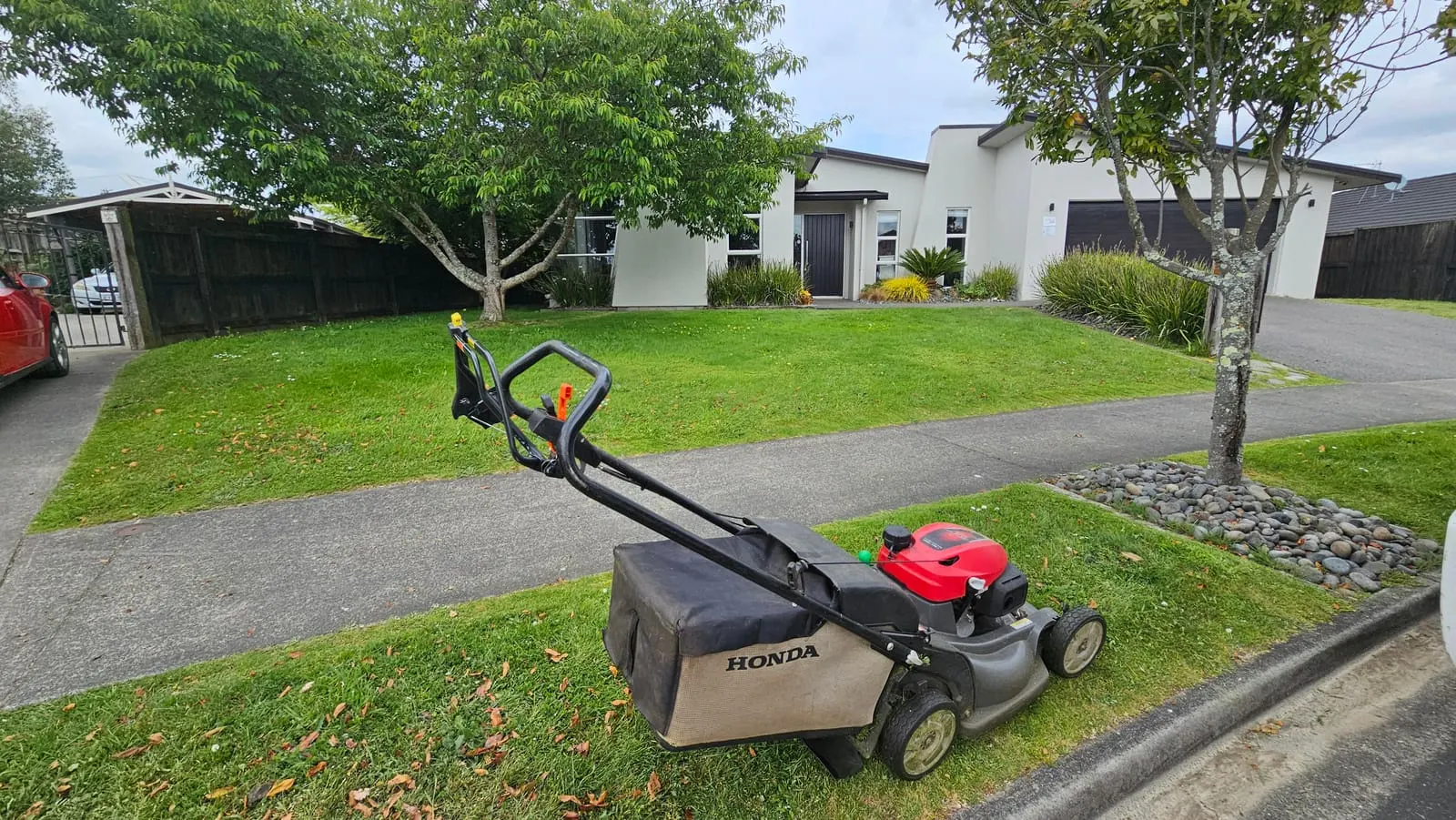
- Mow with the catcher on. A lot of the seed heads go into the catcher instead of getting spread across the lawn for next year. Put the clippings in the rubbish, not the compost.
- Rake the bad patches. A firm rake on a dry day pulls up a surprising number of the dead plants, prickles and all.
- Try the old carpet trick. On a small area, drag an old bit of carpet or a towel over the lawn. The prickles stick to it. It’s slow, but it works around the trampoline and the back step.
- Don’t scalp the lawn. Cutting low doesn’t remove prickles, it just thins the grass, and thin grass is where next year’s weed starts.
- Jandals. Honestly. Until the seeds break down or get trodden in, the worst patches will still bite.
Where it turns up in Papatoetoe
Onehunga weed loves open ground, full sun and hard, compacted soil, the opposite of what grass wants. So it shows up in the same places on most South Auckland sections:
- The berm, parked on, walked on, and baked hard in summer.
- Along the driveway and path edges, where the grass is always thin.
- Where the kids play and the dog runs, worn down to bare patches.
- Newer infill sections, where the topsoil is thin and the lawn went down in a hurry.
The seeds travel on shoes, paws and mower wheels, which is why once one lawn in the street has it, the ones next door usually do too.
A thick lawn keeps it out
Jay mows lawns across Papatoetoe, Hunters Corner, Puhinui, Middlemore, Ōtāhuhu, Ōtara, Manukau, Wiri and Māngere East, regularly and at the right height, so the grass stays thick and the weeds don’t get a start. Fortnightly, monthly or one-off. Free quote.
Call Jay 022 404 8156Stopping it next year
Onehunga weed is an annual. Every plant in your lawn next spring will grow from a seed that is sitting there right now. So the fix is two things: kill it while it’s small, and don’t give the seeds bare ground to land on.
- Spray in winter. Use a selective lawn weed spray that lists Onehunga or prickle weed on the label. Any garden centre in Manukau has one. “Selective” means it kills the weed and leaves the grass. Don’t use Roundup or glyphosate on the lawn, it kills the grass too.
- Get the timing right. June to August. Auckland winters are mild, so the weed gets going earlier here than further south. Spraying in August usually catches it just before it flowers. September is often too late.
- Pick a dry, still day, and don’t mow for a few days either side so the weed has leaves to take the spray in.
- Fill the bare patches in autumn. Sow grass seed in March or April. Every bare patch you fill is one less place for a prickle seed to grow.
- Keep the lawn mowed at a sensible height all year. A thick lawn shades the soil, and the seed never gets a start.
Put a reminder in your phone for the start of July: “spray the prickles.” It’s the one lawn job in Auckland with a real deadline.
Frequently asked questions
What are the prickles in my lawn?
Almost always Onehunga weed, also sold as prickle weed or bindi. It is a small, flat, ferny weed that grows through winter, then sets seed in spring. Each seed has a hard spine, and that seed is the prickle.
Can I spray Onehunga weed in November?
You can, but it will not remove the prickles that are already there. By November in South Auckland the seeds have formed and hardened. Spraying kills the plant, which is dying off anyway, and leaves the prickles in the lawn.
When should I spray for prickles in Auckland?
In winter, June to August, while the weed is small, soft and has not flowered. Auckland’s mild winters mean it gets going early, so August is the last safe month for most South Auckland lawns.
How do I get prickles out of my lawn now?
Mow with the catcher on to pick up a lot of the seed heads, and rake the worst patches. On a small area, an old piece of carpet or a towel dragged over the lawn picks up a surprising number of them. Then plan to spray next winter.
Why is Onehunga weed called that?
It is named after Onehunga, in Auckland, where it was first noticed in New Zealand. It originally came from South America. It is still one of the most common lawn weeds in Auckland.
Free quote
Get a free quote from Jay
The quickest way is to ring or text. Jay answers his own phone.
Servicing Papatoetoe & surrounding areas.